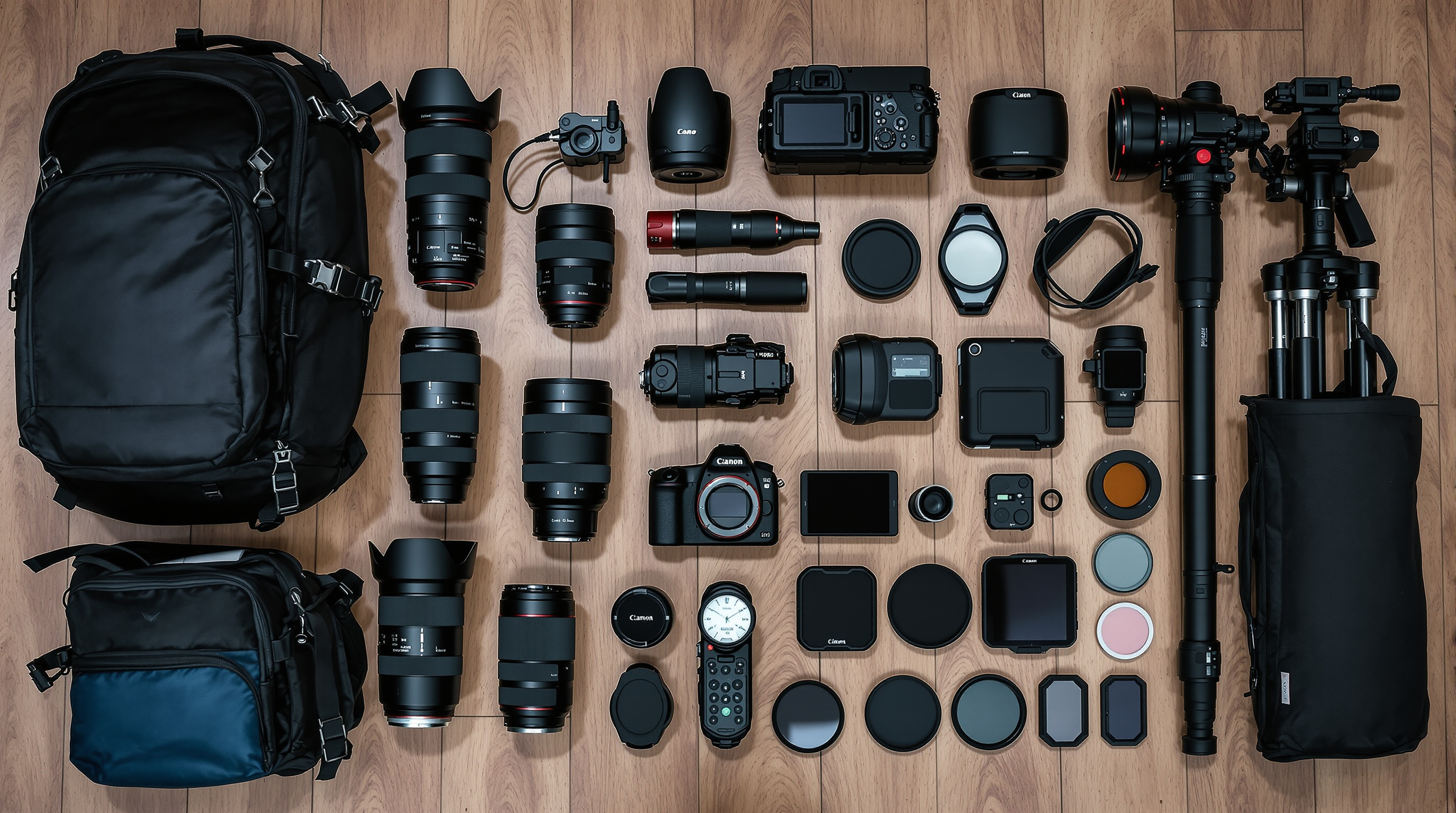
Outdoor photography demands equipment that performs reliably in challenging conditions while remaining practical to carry over distances. This guide covers essential gear categories with recommendations for various budgets and shooting styles.
Camera Bodies
Weather sealing matters significantly for outdoor photographers. Dust, moisture, and temperature extremes are common in field conditions. While no camera is truly waterproof, weather-sealed bodies resist environmental contamination that can damage internal components.
Mirrorless cameras offer advantages for outdoor work: lighter weight, shorter flange distances enabling more compact lenses, and electronic viewfinders that preview exposure and white balance effects. Sony, Canon, and Nikon all offer excellent weather-sealed mirrorless options.
DSLRs remain relevant, especially for photographers with existing lens investments. Optical viewfinders work better in extreme cold where electronic viewfinders may slow, and battery life generally exceeds mirrorless alternatives.
Crop sensor cameras provide reach advantages for wildlife within smaller, lighter packages. Full-frame sensors excel in low light and offer shallower depth of field for creative control, but the size and weight difference matters on long hikes.
Lens Selection
A versatile zoom lens like a 24-70mm f/2.8 covers most general outdoor photography needs. This range handles landscapes, environmental portraits, and travel documentation without lens changes.
Wide-angle lenses (14-24mm) are essential for landscape work, capturing expansive scenes and exaggerating foreground elements. Ultra-wide options require careful composition to avoid distortion at frame edges.
Telephoto zooms (70-200mm or 100-400mm) bring distant subjects closer, compress perspective in landscapes, and enable wildlife photography. These lenses also create pleasing portrait bokeh despite outdoor backgrounds.
Prime lenses offer maximum apertures and optical quality in compact packages. A 35mm or 50mm prime makes an excellent walking-around lens, while an 85mm or 105mm prime excels for portraits in natural light.
Tripods and Support
Carbon fiber tripods provide excellent stability at reasonable weights. Look for models that extend above your eye level without needing to extend the center column, which reduces stability.
Ball heads offer quick positioning for changing conditions. Arca-Swiss compatible quick release plates allow rapid camera mounting and compatibility with most modern equipment.
Travel tripods sacrifice height and stability for packability. These compromises make sense for travel with luggage restrictions but may frustrate photographers accustomed to full-sized equipment.
Monopods provide partial support for telephoto work when tripods are impractical. They reduce arm fatigue during wildlife waits and improve sharpness over fully handheld shooting.
Filters
Circular polarizers reduce reflections on water and glass, deepen blue skies, and cut atmospheric haze. These effects cannot be fully replicated in post-processing, making polarizers essential for landscape photographers.
Neutral density filters enable long exposures in bright conditions. A 6-stop ND filter allows smooth water effects at midday, while 10-stop versions create dreamlike blur during daylight.
Graduated ND filters balance bright skies with darker foregrounds at capture. Software-based alternatives exist but work best when scene elements don't cross the transition zone.
Bags and Protection
Backpack-style camera bags distribute weight for hiking comfort. Look for bags with access options beyond top-loading, as side or back access speeds lens changes without setting the pack down.
Rain covers protect equipment during precipitation. Lightweight emergency covers pack small, while dedicated rain gear provides more comprehensive protection for extended wet-weather shooting.
Lens cases and wraps protect optics during transport. Neoprene wraps provide impact protection, while hard cases suit checked luggage or rough vehicle travel.
Accessories
Extra batteries are essential for long days afield. Cold weather dramatically reduces battery capacity, making spares even more important in winter conditions.
Memory cards in adequate quantity prevent running out of storage. Carry backup cards and consider primary cards with enough capacity for each shooting session without in-field changes.
Cleaning supplies including microfiber cloths, lens brushes, and air blowers maintain optical performance. The LensPen combines brush and cleaning tip in a pocket-sized package.
Headlamps enable pre-dawn setups and post-sunset pack-out without needing hands. Red-light modes preserve night vision for astrophotography.
Smart packing prioritizes essential equipment over comprehensive gear. Every item carried should earn its place through actual use. After several trips, patterns emerge showing which equipment performs and which stays unused in the bag.