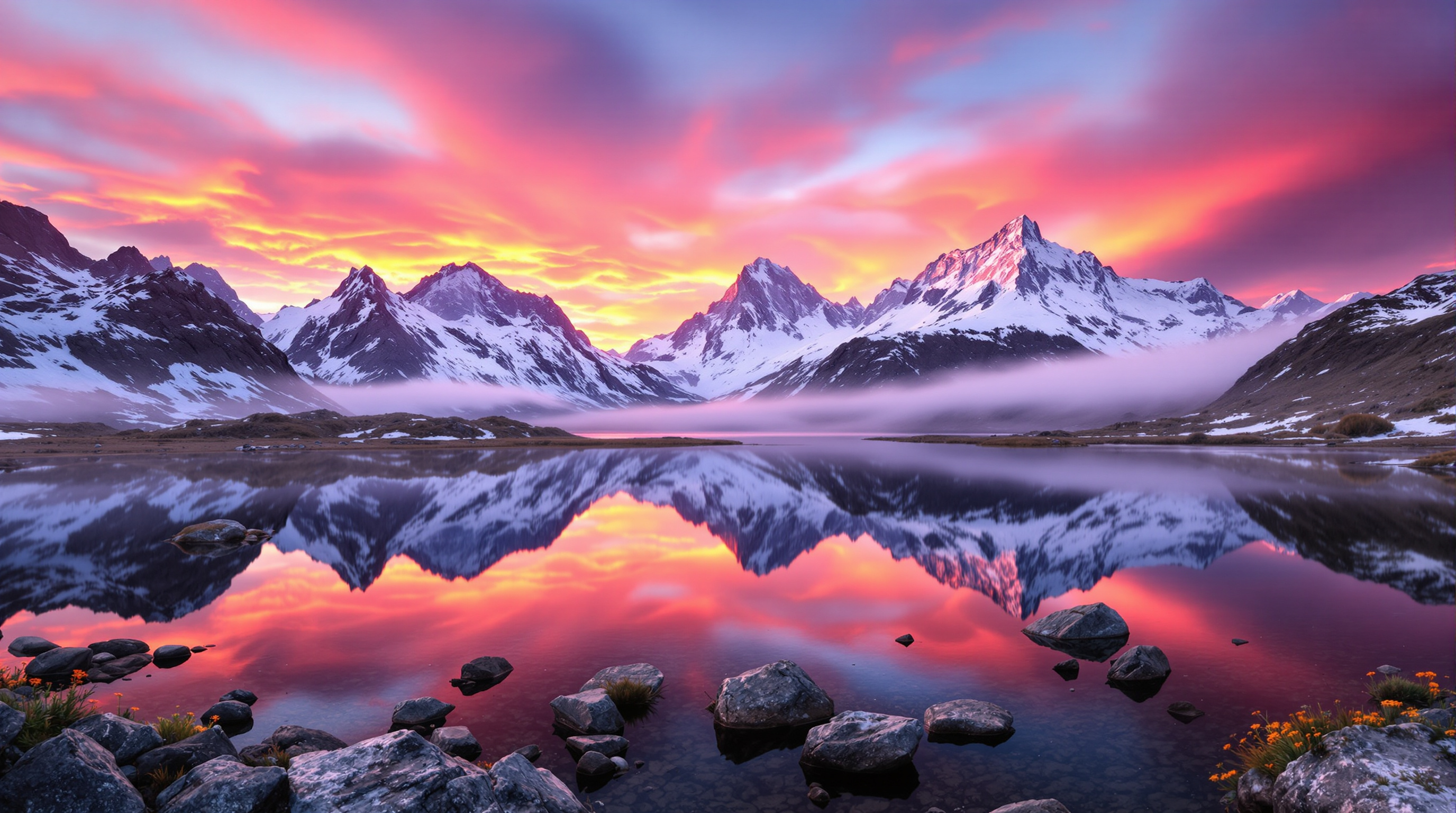
Landscape photography celebrates the natural world through careful observation of light, weather, and composition. Unlike studio work, landscape photographers must adapt to conditions they cannot control, making preparation and patience essential virtues.
Planning for Light
Light quality varies dramatically throughout the day. The hours around sunrise and sunset provide warm, directional light that reveals texture and creates mood. Midday light, while harsh, can work for certain subjects like deep canyons or dense forests where overhead illumination reaches otherwise dark areas.
Study your intended location through multiple light conditions before committing to a shoot time. Visit during different seasons if possible, as sun angles change dramatically throughout the year, altering which features receive direct light.
Use planning tools like PhotoPills, TPE (The Photographer's Ephemeris), or Sun Surveyor to preview sun positions. These applications show exactly where the sun will rise and set, allowing precise planning of compositions that incorporate direct sunlight or avoid harsh lighting.
Composition Fundamentals
Leading lines guide viewers through the frame using natural elements. Rivers, roads, fences, and ridgelines create paths for the eye to follow from foreground to background.
Foreground interest adds depth and scale to grand vistas. Rocks, flowers, and textural elements in the nearest portion of the frame establish a visual anchor before the eye travels to distant features.
The rule of thirds provides starting points for horizon placement. Low horizons emphasize dramatic skies, while high horizons draw attention to foreground and middle ground details.
Symmetry and reflections in water create mirror compositions that work best with precise horizontal alignment. Use a spirit level or electronic level to ensure perfectly straight horizons.
Working with Weather
Dramatic weather often produces the most compelling landscape images. Storm fronts, clearing conditions, and atmospheric phenomena create moods impossible under blue skies.
Fog and mist simplify complex scenes, isolating subjects from busy backgrounds. Early morning fog often lifts as the sun rises, providing a narrow window for atmospheric images before conditions clear.
Rain requires weather protection for equipment but creates saturated colors, reflective surfaces, and potentially rainbows. Post-rain conditions frequently offer spectacular light as clouds break apart.
Snow transforms familiar landscapes and provides high-key backgrounds. Overexpose slightly from meter readings to maintain snow's brightness, or use exposure compensation of +1 to +2 stops.
Technical Considerations
Hyperfocal distance focusing maximizes depth of field in landscape work. Focus approximately one-third into the scene rather than at infinity to ensure sharpness throughout. Smartphone apps can calculate precise hyperfocal distances for any aperture and focal length.
Apertures between f/8 and f/11 typically provide the sharpest results on most lenses while maintaining excellent depth of field. Narrower apertures like f/16 or f/22 increase depth of field but introduce diffraction softening.
Low ISO settings maximize image quality by minimizing noise. Use a tripod to enable low ISOs when slow shutter speeds would otherwise cause blur.
Filters remain valuable despite powerful digital editing. Polarizers reduce reflections and enhance saturation in ways difficult to replicate in post-processing. Graduated neutral density filters balance bright skies with darker foregrounds at capture.
Post-Processing Landscapes
Raw files provide maximum editing flexibility. Shoot in raw format to preserve highlight and shadow detail that may appear lost in camera previews.
Begin editing with basic adjustments: exposure, contrast, highlights, shadows, and white balance. Get these fundamentals right before moving to local adjustments or creative effects.
Dodging and burning draw attention to key areas while subduing distractions. Subtly darken frame edges to keep viewers' eyes within the composition.
Saturation and vibrance adjustments should enhance natural colors without creating an artificial appearance. Reference your memory of the actual scene, as digital adjustments can quickly exceed reality.
Sharpening should be applied last in the editing workflow, sized appropriately for output destination. High-resolution prints may require different sharpening than web-sized images.
Developing Your Eye
Regular practice in familiar locations teaches you to see light and composition with increasing sophistication. Revisit the same scenes in different conditions to understand how weather and seasons transform familiar subjects.
Study the work of landscape masters, analyzing their compositions and light. Ansel Adams, Galen Rowell, and contemporary photographers like Marc Adamus and Art Wolfe demonstrate different approaches to the genre.
Print your work to truly evaluate results. Images that appear stunning on backlit screens often reveal weaknesses when printed. The discipline of printing raises standards and clarifies areas for improvement.
Seasonal Planning and Long-Term Projects
Some of the most compelling landscape portfolios emerge from documenting a single location across all four seasons. Returning to the same viewpoint in spring bloom, summer fullness, autumn color, and winter starkness reveals transformations invisible in a single visit. This approach builds a deeper connection to place and produces work with narrative coherence.
Keep a planning calendar marking astronomical events, expected weather patterns, and natural cycles relevant to your locations. Wildflower blooms, autumn foliage peaks, and predictable fog patterns all offer narrow windows that reward careful scheduling. Combining multiple natural events, such as a full moonrise behind a mountain during peak fall color, creates images with layered visual interest.