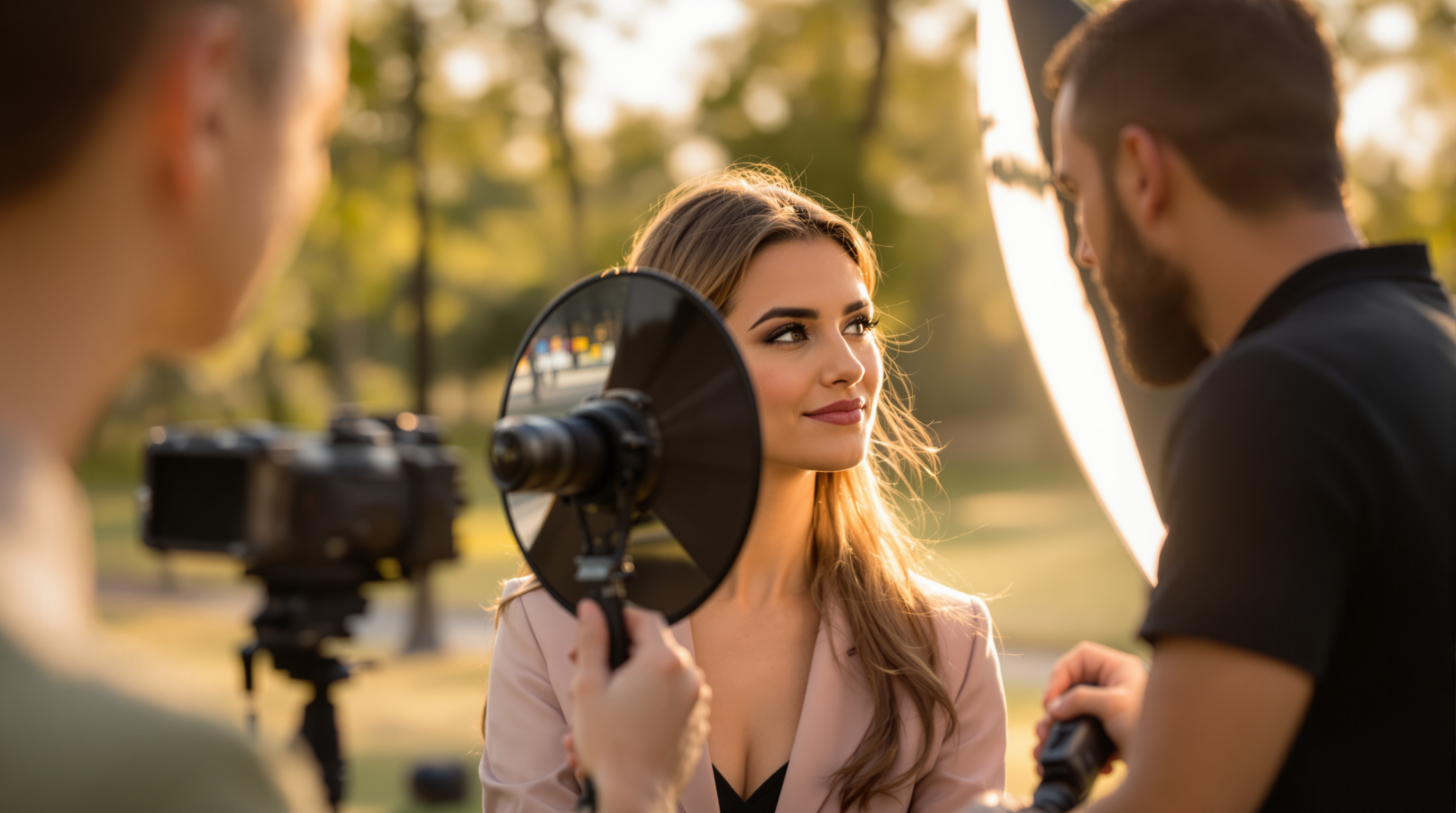
Outdoor portrait photography leverages natural light's beauty while presenting unique challenges. Understanding how to work with various lighting conditions, locations, and times of day transforms environmental portraits from snapshots into compelling images.
Finding Great Light
Open shade provides the most consistent natural portrait lighting. Look for large shaded areas near buildings, under trees with dense canopies, or under awnings. The shade blocks direct sunlight while surrounding bright surfaces reflect soft, even illumination onto your subject.
Position subjects facing the brightest part of the open shade area. This creates catch lights in their eyes and prevents squinting. Check for dappled light patterns that can create unflattering spots on faces.
Overcast skies act as giant softboxes, wrapping subjects in even light from all directions. While lacking the drama of golden hour, cloudy conditions produce flattering skin tones and eliminate harsh shadows under eyes and noses.
Golden Hour Portraiture
The hour before sunset offers warm, directional light ideal for portraits. Side lighting emphasizes facial structure and creates dimensional images, while backlighting produces rim light and lens flare effects.
Backlit portraits require exposure compensation or fill techniques to prevent silhouettes. Use a reflector to bounce light back onto faces, or use fill flash balanced to ambient light levels.
Front lighting during golden hour produces flat but universally flattering illumination. This approach works well for group portraits where even lighting across all faces matters more than dramatic shadows.
Handling Harsh Sunlight
Midday sun creates unflattering shadows under brows, noses, and chins. When shooting in bright conditions is unavoidable, several techniques improve results.
Place subjects with their back to the sun, using the strong light as a rim or hair light. Fill the face with reflected light from a large reflector or white surface. This technique requires careful exposure to balance subject and background.
Find natural reflectors in the environment. Light-colored walls, concrete paths, and even car hoods can bounce light upward into faces, reducing shadow depth.
Use diffusion panels to soften direct sunlight. Large translucent panels held between sun and subject create soft, directional light similar to studio equipment.
Location Considerations
Background selection significantly impacts portrait success. Look for simple, uncluttered backgrounds that complement without competing with subjects. Distance from background increases bokeh blur, so position subjects well forward of busy elements.
Urban environments provide architectural leading lines and texture. Industrial locations offer gritty character, while parks and gardens provide natural framing with foliage.
Beach locations require attention to reflective surfaces. Sand and water bounce light upward, filling shadows naturally but potentially causing subjects to squint. Position subjects for side lighting rather than facing into reflected glare.
Subject Positioning
Angle subjects slightly toward the light source for dimensional lighting. Even small adjustments in head position dramatically change how shadows fall across facial features.
Have subjects look toward their nose rather than directly at the camera to elongate necks and define jawlines. This simple technique flatters almost everyone.
For group portraits, arrange subjects at varying distances from the camera to add depth. Ensure everyone is at similar distances from the light source to maintain even exposure across the group.
Equipment Recommendations
Fast prime lenses (50mm f/1.8, 85mm f/1.4) excel at outdoor portraits. Wide apertures create background separation while maintaining sharp focus on subjects.
A circular reflector (5-in-1 style with gold, silver, white, black, and translucent surfaces) handles most outdoor fill light needs. Smaller 32-inch reflectors work for individual portraits, while 42-inch versions suit groups.
A lens hood prevents flare when shooting toward light sources. Even backlit portraits benefit from reduced stray light entering the lens.
Exposure metering for outdoor portraits benefits from spot mode focused on the subject's face. Matrix or evaluative metering can be fooled by bright backgrounds or backlit conditions.
Portrait sessions in variable outdoor light require constant adjustment and awareness. Clouds passing in front of the sun, changing angles as the sun moves, and subjects moving in and out of shade all require quick response. This dynamic environment, while challenging, produces natural, engaging portraits that studio conditions rarely match.